
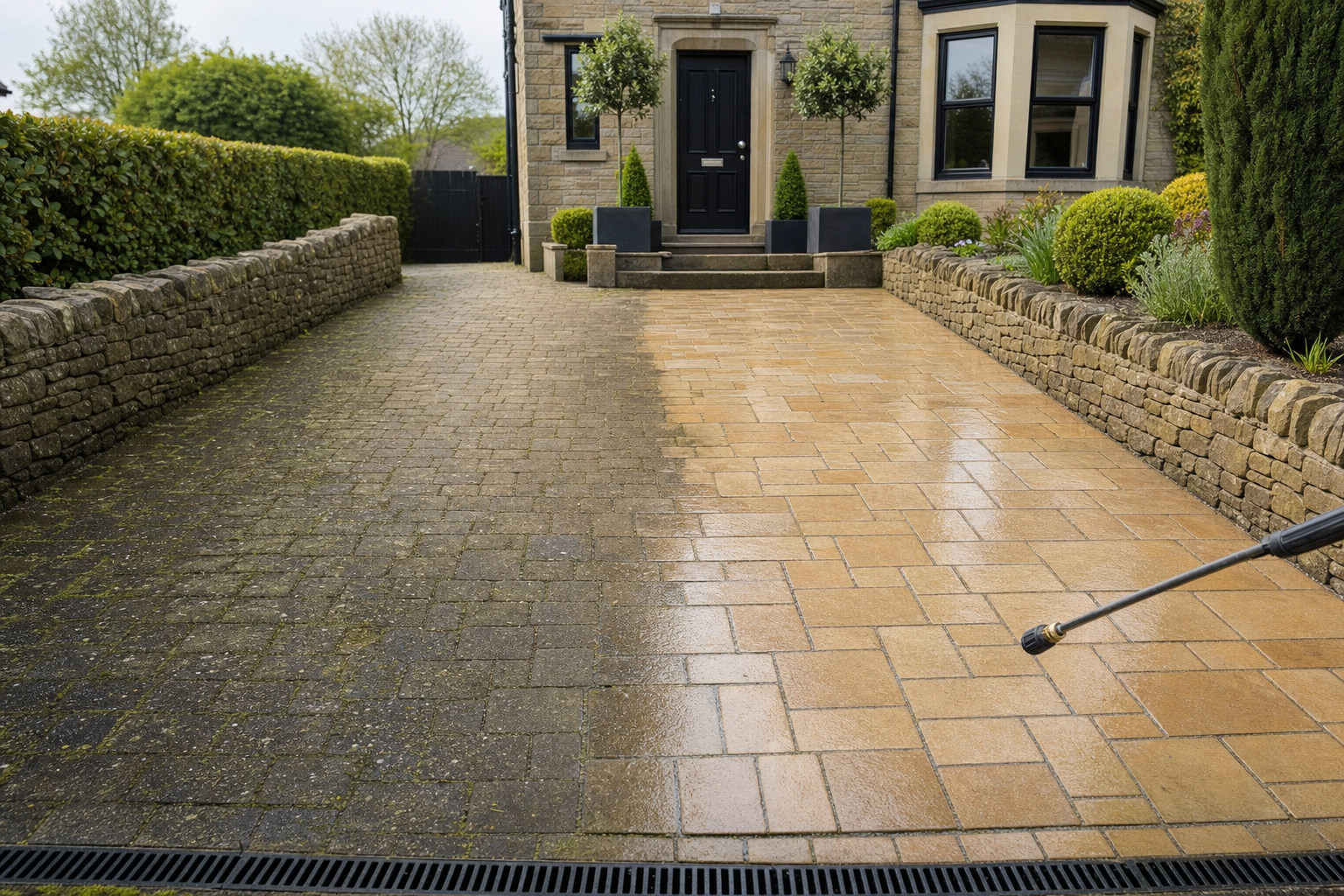
Driveway cleaning that respects the surface
Material-specific methods
We adjust the cleaning approach for block paving, concrete, stone and vulnerable edges.
Lifting of contamination
Pre-treatment and controlled rinsing help reduce patchy cleaning across the driveway.
Protection available
Once clean, the surface can be assessed for a sealer or another suitable finishing step.
Driveways need more than a quick surface wash
Traffic film, embedded dirt, organic growth and everyday weathering can leave a driveway looking tired long before the surface itself has failed. We clean and revitalise block paving, concrete, stone and other driveway materials using a sequence that suits the surface. Pre-treatment, controlled cleaning and proper rinsing help lift contamination more evenly across the area.
We also pay attention to joints, vulnerable edges and sections that need a more careful touch. With Natural Stone Cleaning Ltd, driveway restoration is planned to improve the whole entrance surface rather than chase the most obvious dirty patch.
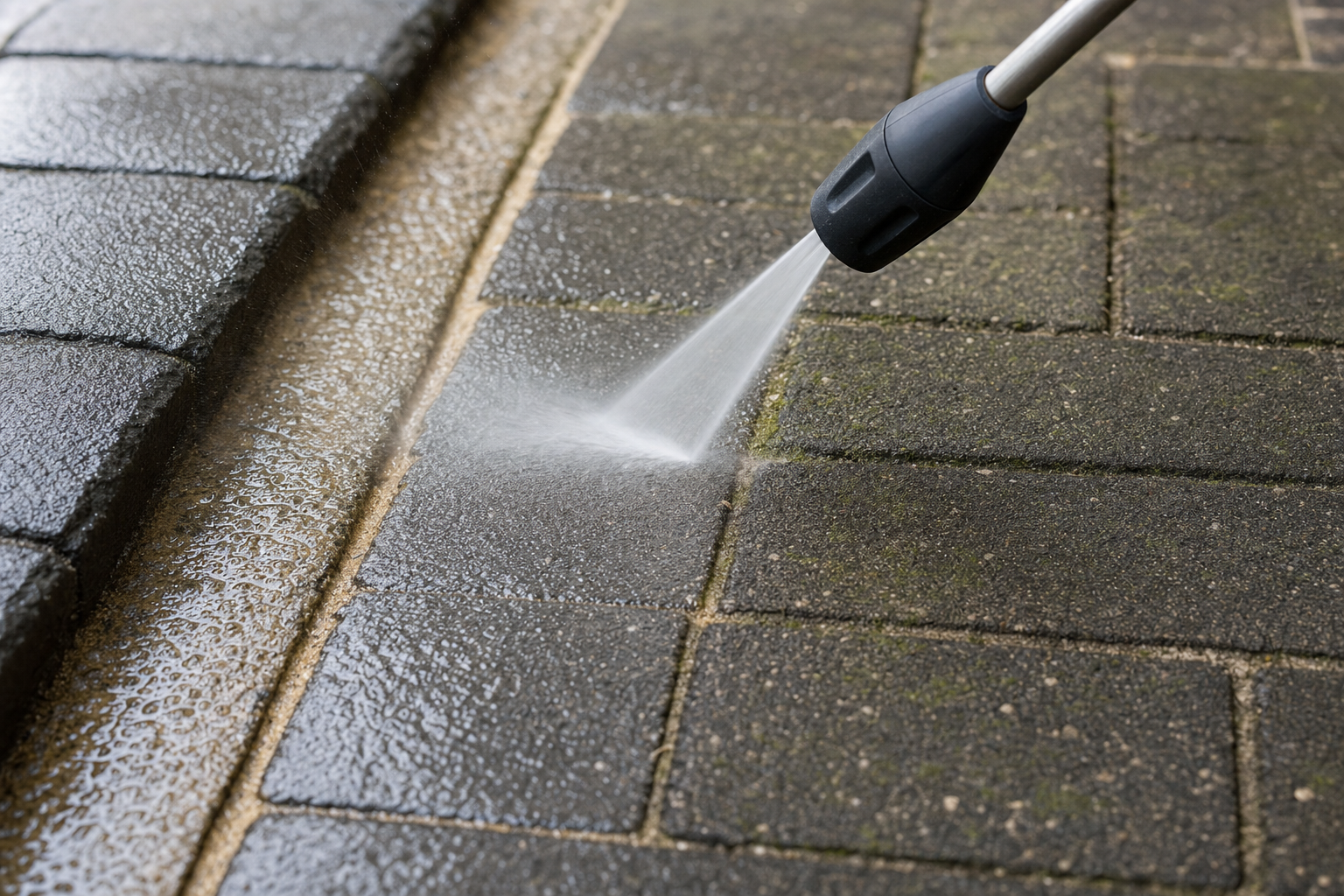
Preparation, access and finishing options
Before we arrive, it helps if vehicles and movable items can be cleared so we can clean the full area properly. We also think about access, entrances, drainage points and how water will move during the job. Once the driveway is clean, we can discuss optional protective treatment where it is suitable for the material and the finish you want.
Customers using Natural Stone Cleaning Ltd get a process shaped by the driveway itself and the practical way the area is used day to day.
Frequently asked questions
Do I need to move cars before driveway cleaning?
Yes, clear vehicle access makes a big difference. It allows us to clean the full area more evenly and work safely around the whole surface, including edges and joints. If there are any fixed obstacles or access limits, tell us in advance so we can plan the cleaning setup properly.
Can you clean block paving and concrete driveways?
Yes. We clean block paving, concrete, stone and other driveway surfaces, adjusting the method to suit the material and its condition. That matters because joints, edges and the way contamination sits on the surface can vary a lot from one driveway type to another.
Is protective treatment always needed afterwards?
Not always. Protection depends on the surface material, the current condition and the finish you want. Once the driveway is properly cleaned, we can explain whether a follow-on treatment is likely to help and what you should expect from it in day-to-day use.